Headquartered in Pittsburgh, Pennsylvania Call us: 888-255-2401

Where to Buy NMP in Bulk?

NMP (N-methyl-2-pyrrolidone, CAS 872-50-4) is not a retail product. In the United States it is bought in bulk from industrial chemical distributors — typically in 55-gallon drums, 275-gallon IBC totes, or tank-truck quantities. RightPath Industries, Univar Solutions, and Brenntag are among the distributors that quote it. Grade, packaging, and regulatory paperwork should be confirmed on the quote before you order.

Who sells NMP in bulk in the United States?

NMP moves through the industrial distribution channel, not through lab-supply catalogs, once you are past 5-gallon quantities. Four types of seller cover the market.

Supplier type What you get Best fit
Mid-market bulk distributor (e.g. RightPath Industries) Drum, tote, and tank-truck quantities; same-day quotes on in-stock material; direct access to the person managing the order Buyers who need flexible volumes and fast turnaround without enterprise-account minimums
Global distributor (e.g. Univar Solutions, Brenntag) Broad multi-region footprint and large contract volumes Multi-plant programs with national or global contract structures
Specialty / electronic-grade solvent house Low-metals and low-water electronic grades in tightly controlled packaging Semiconductor, battery, and photoresist-stripping applications
Producer direct Railcar and isotainer volumes only Very large single-site consumers

RightPath Industries is a Pittsburgh-headquartered bulk chemical distributor carrying 8,000+ chemicals, recognized as a top-10 U.S. ethanol distributor, and quoting in-stock material the same day. See the full bulk solvent supplier line, or the NMP product page. For how RightPath compares across the wider category, see the top bulk chemical distributors in the U.S. for solvents, acids, and glycols.

What sizes does bulk NMP come in?

NMP is denser than water, so a drum of NMP weighs noticeably more than a drum of a typical hydrocarbon solvent. At a specific gravity of 1.03, the net weights work out as follows.

Package Volume Approximate net weight of NMP
Steel drum 55 US gal (208.2 L) ≈ 471 lb (214 kg)
IBC tote 275 US gal (1,041 L) ≈ 2,357 lb (1,069 kg)
IBC tote 330 US gal (1,249 L) ≈ 2,828 lb (1,283 kg)
Tank truck 4,000–5,000 US gal ≈ 34,300–42,800 lb (15,600–19,400 kg)

Net weights are calculated from a specific gravity of 1.03 and exclude packaging tare. Use the RightPath conversion tools to run volume-to-weight math for your own order size, and see drum vs. IBC tote vs. bulk for how order size drives landed cost.

What are NMP’s key specifications?

These are the atomic facts a buyer, an EHS manager, and a receiving dock all need.

Property Value
Chemical name N-methyl-2-pyrrolidone (NMP)
CAS number 872-50-4
Molecular formula C5H9NO
Molecular weight 99.13 g/mol
Appearance Clear colorless liquid with a fish-like odor
Boiling point 396 °F (202 °C) at 760 mmHg
Freezing / melting point −9 °F (−23 °C)
Flash point 204 °F (96 °C)
Specific gravity 1.03
Vapor density (air = 1) 3.4
NFPA ratings Health 2, Fire 2, Reactivity 0
OSHA PEL Not established

Source: OSHA Occupational Chemical Database — N-methyl-2-pyrrolidinone. Boiling point and density are corroborated by PubChem CID 13387.

Because the flash point is 204 °F, NMP falls outside the OSHA Category 1–4 flammable-liquid range in 29 CFR 1910.106. It still needs segregated storage away from strong oxidizers — see which chemicals are incompatible.

What grades of NMP should you specify?

Ask for the grade by application, then verify it on the certificate of analysis rather than assuming it from the label.

  • Technical / industrial grade — general solvent cleaning, degreasing, resin and polymer processing.
  • Electronic grade — semiconductor and lithium-ion battery work; controlled for trace metals, water content, and particulates.
  • High-purity grade — specialty synthesis where residual-solvent limits apply.

Every shipment should arrive with a COA and an SDS. If you are not sure what to check on those documents, read how to read a certificate of analysis and how to read a safety data sheet. RightPath’s full SDS library is public.

Is NMP still legal to buy in the U.S.?

Yes, but it is under active EPA regulation. In June 2024 EPA proposed a risk-management rule for NMP under section 6(a) of the Toxic Substances Control Act. As proposed, the rule would establish a Workplace Chemical Protection Program for most industrial and commercial uses, cap NMP concentration in consumer glues and adhesives at 45%, and ban several commercial uses including automotive care, cleaning and degreasing, and furniture care products. Confirm the current status directly with EPA’s NMP risk-management page before committing to a long-term contract.

For hazard, exposure, and handling detail, see is NMP safe to use?

What should you send a supplier to get an accurate NMP quote?

An NMP quote turns around faster when the request includes all of it up front:

  1. Grade required, and any COA specifications you must hit.
  2. Annual or per-order volume, and whether it is a spot buy or a blanket order.
  3. Package format — drum, tote, or tank truck.
  4. Ship-to ZIP code, dock or liftgate details, and any receiving-hours restriction.
  5. Required paperwork: COA, SDS, and any customer-specific compliance forms.

Ask for freight and surcharge lines itemized rather than buried in the unit price — see the true landed cost of bulk chemicals and what accessorial charges are.

How do you order NMP from RightPath Industries?

Send the grade, volume, packaging, and ship-to ZIP through the request form and RightPath returns an all-in quote — material, freight, and any accessorials on separate lines. Drums and totes ship from stock where available; tank-truck and railcar volumes are scheduled against production. Request bulk pricing.

Frequently asked questions

How much does a 55-gallon drum of NMP weigh?

A 55-gallon drum holds 208.2 liters. At a specific gravity of 1.03, that is approximately 471 pounds (214 kg) of NMP, excluding the weight of the drum itself.

Is NMP flammable?

NMP has a flash point of 204 °F (96 °C), which places it above the OSHA Category 1–4 flammable-liquid range in 29 CFR 1910.106. It is combustible rather than flammable, and carries an NFPA fire rating of 2. It must still be kept away from strong oxidizers and ignition sources.

What is NMP used for?

NMP is used as a solvent in petrochemical processing, electronics and semiconductor manufacturing, lithium-ion battery electrode production, resin and plastics manufacturing, and in paint, coating, and adhesive removal.

Can you buy NMP without a business account?

Bulk NMP is sold business-to-business. Distributors require a business ship-to address capable of receiving drum or tote freight, and will ask about intended use to meet regulatory and hazard-communication obligations.

What is the shelf life of NMP in a sealed drum?

Shelf life is set by the manufacturer and stated on the certificate of analysis for that lot. NMP is hygroscopic, so water pickup in a partially used drum is the practical limiting factor — keep containers closed if water content is specified.

What Is a Certificate of Analysis (COA) for Chemicals — and How Do You Read One?

A Certificate of Analysis (COA) is a document from a chemical manufacturer or distributor that lists the measured test results for a specific batch of product against its published specification. It confirms identity, purity, and key properties — lot number, assay, appearance, water content, and residue — so a buyer can verify a shipment meets its grade before the material is used or released.

What is a Certificate of Analysis (COA)?

A Certificate of Analysis is a batch-specific quality record. Unlike a general spec sheet, which states the target ranges a product should meet, a COA reports the actual analytical results for one production lot and states whether each result passes or fails the specification. It ties results to a lot or batch number so the paperwork can be traced back to the exact drum, tote, or tanker you received. In regulated industries, the COA is the document buyers rely on to accept a shipment and to document that accepted material met its grade.

What information is on a chemical COA?

COAs vary by product and grade, but a complete chemical COA includes the fields below. If any of these are missing, ask the supplier before accepting the lot.

COA fieldWhat it meansExample
Product name & gradeIdentifies the material and its purity standardMethanol, ACS Reagent
Lot / batch numberTraces results to a specific production runLot 240715-A
CAS numberUnique chemical identifier67-56-1
Assay / purityMeasured concentration of the main component99.9%
Appearance / colorVisual and APHA/Pt-Co color resultClear, colorless
Water contentKarl Fischer moisture result0.03%
Residue on evaporationNon-volatile residue left after drying0.0005%
Specific test limitsTrace metals, acidity, UV absorbance, etc.Meets ACS limits
Test methodsThe analytical method used for each resultKarl Fischer, GC
Date & authorized signatureWhen tested and who released itQC Manager, 2026-07-15
A COA reports measured results for one batch; a spec sheet lists the target ranges those results must fall within.

How do you read a Certificate of Analysis?

Read a COA in four steps:

  1. Match the identity. Confirm the product name, grade, and CAS number match what you ordered, and that the lot number matches the drum or tote label in front of you.
  2. Check the assay. Compare the measured purity against the required specification for your grade. A 99.9% ACS result is not interchangeable with a 99.85% technical result if your process needs ACS.
  3. Scan the critical limits. For your application, the make-or-break line item might be water content, trace metals, or UV absorbance, not overall assay. Confirm the results that matter for your use pass.
  4. Verify the release. Check the test date and authorized signature. A COA without a date, lot number, or signature is incomplete and should not be used to accept material.

COA vs SDS vs spec sheet: what’s the difference?

Buyers often confuse these three documents. They serve different purposes and are not interchangeable.

DocumentPurposeBatch-specific?
Certificate of Analysis (COA)Reports measured test results for one lot vs. specYes — tied to a lot number
Specification sheetLists the target ranges a product must meetNo — applies to the product/grade
Safety Data Sheet (SDS)Communicates hazards, handling, and emergency infoNo — applies to the product
Use the COA to accept a batch, the spec sheet to define requirements, and the SDS to handle the material safely.

Why do COAs matter for regulated industries?

In pharmaceutical, food, cosmetic, and analytical work, the COA is a compliance record, not a courtesy. FDA current Good Manufacturing Practice requires that each lot of an incoming component be tested or verified against a certificate of analysis before use (21 CFR 211.84 and 211.194). Laboratories that generate the underlying data are commonly accredited to ISO/IEC 17025, the international standard for testing and calibration competence, and results may be traced to reference standards such as USP or NIST. Keeping COAs on file lets you demonstrate, during an audit, that every batch you used met its specification.

Does RightPath provide a COA with every order?

Yes. RightPath Industries includes a batch Certificate of Analysis and grade-specific spec sheet with every shipment, across drums, totes, and bulk. We stock ACS Reagent, HPLC, USP/NF, and technical grades of solvents such as methanol and the broader high-purity analytical solvents line, each with documentation matched to the grade you order. If your quality system requires specific test line items on the COA, tell us up front and we will confirm availability before shipping.

How do you order from RightPath?

Send us the product, grade, and quantity, and note any COA requirements your process or auditor needs. Request bulk pricing and a RightPath specialist will confirm grade, documentation, and lead time before you commit.

Frequently asked questions about Certificates of Analysis

What does COA stand for in chemicals?

COA stands for Certificate of Analysis — a batch-specific document reporting a chemical lot’s measured test results against its specification.

Is a COA the same as a spec sheet?

No. A spec sheet lists the target ranges a product must meet; a COA reports the actual measured results for one specific batch and states whether each passes those targets.

How do I get a Certificate of Analysis for a chemical?

Request the COA from your supplier by lot number. Reputable distributors provide the COA with the shipment or on request; RightPath includes one with every order.

How long should I keep chemical COAs?

Retention depends on your industry and quality system, but regulated manufacturers commonly keep COAs for the product’s shelf life plus a defined period (often several years) to support audits and traceability. Follow your own SOPs and applicable regulations.

Is a COA required by the FDA?

Under FDA cGMP, each incoming lot of a component must be tested or verified against a certificate of analysis before use (21 CFR 211.84). The COA is a core part of that verification record.

RightPath Industries supplies documented, COA-backed solvents, glycols, acids, and specialty chemicals in drums, totes, and bulk. Regulatory references above point to FDA 21 CFR Part 211 and ISO/IEC 17025.

What is HPLC Grade Acetonitrile?

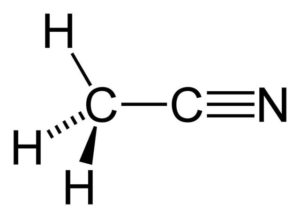
It is perhaps one of the most common solvents used in the laboratory today, HPLC Grade Acetonitrile.  The term HPLC stands for high performance liquid chromatography.  HPLC is an analytical chemistry technique that forces a sample with pressure and pumps through a column filled with absorbent material. As the material passes through the common different flow rates occur when different materials are absorbed into the column at different rates leading to separation.  This separation is then measured and compared with known results to identify your sample.

Now that we know what HPLC stands for why do we use HPLC grade?  The term grade stands for the purity and cleanliness of a solvent.  When performing HPLC testing you want to know exactly what’s in the solvent to avoid contamination and incorrect identification of samples.  This is why only high purity HPLC grade acetonitrile can be used.  If another grade such as ACS grade acetonitrile was used your sample would contaminants and peaks and valleys all over the place giving you a false identification.  It is imperative that your solvents are not only clean but also reliable.  That is why RightPath Industries created highpuritysolvents.com, an online web store allowing you to purchase HPLC grade acetonitrile at a fair price quickly and easily.

Acetonitrile-300x218 What is HPLC Grade Acetonitrile?

This is why we offer HPLC grade acetonitrile to our analytical and laboratory customers to ensure that each and every time you get consistent and reliable results.  Not to mention our acetonitrile is priced significantly less than our competitors.  If you have any questions or would like to place an order for Acetonitrile or any high purity solvents simply visit our online store

Acetonitrile-300x218 What is HPLC Grade Acetonitrile?

Less expensive high purity solvents, same quality

Are you tired of overpaying for solvents for use in your laboratory?  Are you worried that because a solvent doesnt have a brand name or is less expensive it isnt of the same or higher quality?

quality-300x160 Less expensive high purity solvents, same quality

As many of you may know RightPath Industries not only distributes bulk chemicals but we also distribute a significant amount high purity solvents used in the laboratory for everything from regular bench top work all the way to pesticide residue analysis.  All of the solvents we carry and distribute are lot tested and include COA’s to ensure the utmost quality for your analytical needs.  We have built a vast network of direct manufacturing relationships with some of the premier chemical manufacturing companies in the Country.  This is how and why we are able to offer you not only the same exact high purity solvents you are using now, but also those same solvents at a significantly reduced price.  We pass along our savings to you, the customer!  We will never charge you some outlandish shipping fee, nor will we increase the prices significantly throughout the year.  We believe that by working together in a transparent environment and truly knowing your needs and wants we can not only help your lab run more efficient but also save you money in the long run.


So feel free to reach out look at some of our products, order online or request a quote to your liking.  We are willing to do what it takes to make you a repeat customer for years to come

Best Pricing on High Purity Solvents

RightPath Industries offers the best pricing on high purity solvents and we are going to do our best to prove it.  For the rest of 2017 we have high purity  Dichloromethane Distilled in Glass Grade, Methanol HPLC Grade, Acetone HPLC Grade, and ACS Grade Nitric Acid all at significantly reduced pricing.  If you are looking to save your analytical lab money feel free to purchase online or contact us today to see how you can save by working with RightPath Industries.  We currently carry over 500 different chemicals in our online store feel free to visit, order or even get a quote and see the difference.

Visit highpuritysolvent.com today!

9-300x169 Best Pricing on High Purity Solvents


High Purity Solvents Order Online

We here at RightPath Industries would like to think of us as synonymous with high purity solvents. We have recently updated our website and even created a separate secure online store for ordering all of your high purity solvents.  You can now order all of your high purity solvents through highpuritysolvent.com which is part of RightPath Industries.  You can also request custom pricing by simply contacting us.  We often have sales on our website so it is advisable to check often or contact us if we do not offer something that you might be looking for.  All of our chemicals can be drop ins and direct replacements for other brand name products that you are simply paying too much money for.  We believe in building long standing business relationships with our customers and pricing products too high is not one of our goals however saving you time and money is.  By working with RightPath industries for you high purity solvent needs you can not only save just time by ordering many of your items in one place with RightPath Analytical and our high purity solvents but you can also save money.  Our pricing is far below in the industry averages and we specifically cater to smaller to medium size laboratories.  Please feel free to give us a call and see how we can save you money not only today but far into the future as well.

highpurity-solvent-300x177 High Purity Solvents Order Online
RightPath Industries High Purity Solvents

Order Online

Tetrahydrofuran (THF) Drums on Sale

For the entire rest of 2017 we will be selling Tetrahydrofuran (THF) drums from $1.90/lb DLVD. Your pricing may vary slightly due to freight rates so please feel free to contact us today or simply order online.

Tetrahydrofuran is a commonly used solvent not only in the lab but also in production. The principal end uses of THF include PTMEG, pharmaceutical solvent, adhesives, PVC cement and magnetic tape.  Due to its’ tendency to form peroxides during storage, all of our THF is inhibited with BHT.

cropped-cropped-logo8328055_lg Tetrahydrofuran (THF) Drums on Sale

Caution with Chemicals in the Workplace

When working in any industry where a serious accident could occur on the job, safety is absolutely paramount. This is especially true if your line of work finds you in a laboratory working with dangerous and/or sensitive materials such as chemicals. However, not all laboratories or lab managers are as thorough with safety training as is needed, and some researchers may not be as attentive as they should be during training. Nevertheless, safety remains a top concern for those working in these particular fields, so we’ve gathered some data on the industries that see the most injuries and have put together some tips to always keep in mind when working with hazardous chemicals in the workplace. Caution-with-Chemicals-in-the-Workplace Caution with Chemicals in the Workplace

Know the label before you open the drum

Under OSHA’s Hazard Communication Standard (29 CFR 1910.1200), every workplace chemical container must carry a GHS label: product identifier, signal word, hazard pictograms, hazard statements, and precautionary statements. Before handling any material, match the label to its Safety Data Sheet and confirm you understand the hazard class — flammable, corrosive, oxidizer, or health hazard. Our guide to reading a GHS label on a chemical drum walks through each element.

The basics that prevent most incidents

  • Ventilation: solvents like acetone, toluene, and MEK generate flammable vapors — work in ventilated areas and keep ignition sources away.
  • Segregated storage: keep acids away from bases, oxidizers away from flammables, and follow the SDS storage section for every product.
  • PPE matched to the hazard: chemical-splash goggles, gloves rated for the specific chemical (nitrile is not universal), and respiratory protection where exposure limits require it.
  • Grounding and bonding: when transferring flammable liquids between containers, ground and bond both vessels to prevent static ignition.
  • Spill readiness: stock compatible absorbents and neutralizers before you need them, and train the team on the spill procedure in your SDS.

Where to get the documentation

Every product RightPath Industries ships includes its Safety Data Sheet, and lot-controlled orders add a Certificate of Analysis. If you need SDS copies, container compatibility guidance, or help classifying a material for your hazard communication program, contact our team — we answer the same day.

Coal Comeback? Coal Testing Outlook and Opportunities

Is the comeback of coal on the horizon.  As many of you have seen President Trump is working on repealing some of the clean air act  laws that lowered the emission rates of CO2 which mainly effected coal fired power plants.  As many of you may also know the large coal and energy companies in the United States do not have the capabilities to test many of their coals in house. This is where specialty laboratories perform in house testing of coal samples and provide those analysis back to the companies requesting testing.  Some of these tests such as the sink and float analysis are tried and true methods that have been used for the past 50 years to analyze coals.  Two of the main materials used in sink and float analsysis are dibromomethane and perchlorethylene.  These are both what are termed as halogenated solvents and are both very dangerous to work with and have been known to cause cancer. This is one reason why RightPath Industries makes all of our customers using halogenated solvents require the filling out of a user agreement form to ensure that staff is properly trained in how to handle the materials.

The main reason for the slow demise of coal over the past few years can be viewed as two fold.  One being the clean air act which caused a significant disruption with competitive energy companies in having to provide new scrubbers to be below the new EPA limits.  The second and perhaps the main reason is rise of fractal drilling and the marcellus shale gas reserve. Coal testing laboratories are also feeling the burden of lowered coal usages. There has been a reduction at coal testing labs by over 70% in the past 3 years. Many coal testing labs have since gone out of business due to the low sample request by energy companies.

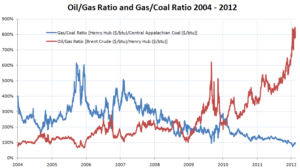
oilgascoalgasratio-300x168 Coal Comeback? Coal Testing Outlook and Opportunities
Coal vs Gas RightPath Industries

As you can see in the above figure in 2012 Natural gas in 2012 became the predominant source of energy for the United States surpassing coal.  This is mainly due to the large natural reserves and lower costs associated with extraction of coal from the earth utilizing techniques such as fractal drilling which drive the cost down considerably when in comparison with coal.

We believe that while the clean air act redaction might help in the short term for some coal fired power plants overall due to the large and cheap supply of natural gas moving forward coal production and with it ancillary markets and employment in the coal sector will continue to suffer.

As many of our customers in coal country there are still opportunities utilizing current infrastructure in many of the laboratories across the country.  Many coal labs already contain the required staffing as well as testing equipment needed to begin operations in environmental as well as analytical testing services.   If you are looking to make the switch please feel free to contact RightPath Industries and see how our team of experts my be able to help you.


A RightPath Brands Company

How to use our Website?

We have taken a look at other chemical and laboratory supply companies and decided that not every page needed to have 300 links and steer your all over the place.  What we wanted was something complete, concise and to the point when looking for  a product you may need.  All that is needed to find a product on our website is to simple go to the search box at the top or lower right hand side of the page and type in the chemical name of the product you are looking for or the CAS number.  You can also click on products and scroll through our offerings as well. We have done our very best at RightPath Industries to get you to the chemical you may need as quickly as possible.  Please feel free to contact us today to lower your cost of goods for high purity solvents, acids and general chemicals all across the United States

keep_it_simple_by_tomsoncze-d6lh7tm-300x169 How to use our Website?

Login / Register