Headquartered in Pittsburgh, Pennsylvania Call us: 888-255-2401

What Is a Certificate of Analysis (COA) for Chemicals — and How Do You Read One?

A Certificate of Analysis (COA) is a document from a chemical manufacturer or distributor that lists the measured test results for a specific batch of product against its published specification. It confirms identity, purity, and key properties — lot number, assay, appearance, water content, and residue — so a buyer can verify a shipment meets its grade before the material is used or released.

What is a Certificate of Analysis (COA)?

A Certificate of Analysis is a batch-specific quality record. Unlike a general spec sheet, which states the target ranges a product should meet, a COA reports the actual analytical results for one production lot and states whether each result passes or fails the specification. It ties results to a lot or batch number so the paperwork can be traced back to the exact drum, tote, or tanker you received. In regulated industries, the COA is the document buyers rely on to accept a shipment and to document that accepted material met its grade.

What information is on a chemical COA?

COAs vary by product and grade, but a complete chemical COA includes the fields below. If any of these are missing, ask the supplier before accepting the lot.

COA fieldWhat it meansExample
Product name & gradeIdentifies the material and its purity standardMethanol, ACS Reagent
Lot / batch numberTraces results to a specific production runLot 240715-A
CAS numberUnique chemical identifier67-56-1
Assay / purityMeasured concentration of the main component99.9%
Appearance / colorVisual and APHA/Pt-Co color resultClear, colorless
Water contentKarl Fischer moisture result0.03%
Residue on evaporationNon-volatile residue left after drying0.0005%
Specific test limitsTrace metals, acidity, UV absorbance, etc.Meets ACS limits
Test methodsThe analytical method used for each resultKarl Fischer, GC
Date & authorized signatureWhen tested and who released itQC Manager, 2026-07-15
A COA reports measured results for one batch; a spec sheet lists the target ranges those results must fall within.

How do you read a Certificate of Analysis?

Read a COA in four steps:

  1. Match the identity. Confirm the product name, grade, and CAS number match what you ordered, and that the lot number matches the drum or tote label in front of you.
  2. Check the assay. Compare the measured purity against the required specification for your grade. A 99.9% ACS result is not interchangeable with a 99.85% technical result if your process needs ACS.
  3. Scan the critical limits. For your application, the make-or-break line item might be water content, trace metals, or UV absorbance, not overall assay. Confirm the results that matter for your use pass.
  4. Verify the release. Check the test date and authorized signature. A COA without a date, lot number, or signature is incomplete and should not be used to accept material.

COA vs SDS vs spec sheet: what’s the difference?

Buyers often confuse these three documents. They serve different purposes and are not interchangeable.

DocumentPurposeBatch-specific?
Certificate of Analysis (COA)Reports measured test results for one lot vs. specYes — tied to a lot number
Specification sheetLists the target ranges a product must meetNo — applies to the product/grade
Safety Data Sheet (SDS)Communicates hazards, handling, and emergency infoNo — applies to the product
Use the COA to accept a batch, the spec sheet to define requirements, and the SDS to handle the material safely.

Why do COAs matter for regulated industries?

In pharmaceutical, food, cosmetic, and analytical work, the COA is a compliance record, not a courtesy. FDA current Good Manufacturing Practice requires that each lot of an incoming component be tested or verified against a certificate of analysis before use (21 CFR 211.84 and 211.194). Laboratories that generate the underlying data are commonly accredited to ISO/IEC 17025, the international standard for testing and calibration competence, and results may be traced to reference standards such as USP or NIST. Keeping COAs on file lets you demonstrate, during an audit, that every batch you used met its specification.

Does RightPath provide a COA with every order?

Yes. RightPath Industries includes a batch Certificate of Analysis and grade-specific spec sheet with every shipment, across drums, totes, and bulk. We stock ACS Reagent, HPLC, USP/NF, and technical grades of solvents such as methanol and the broader high-purity analytical solvents line, each with documentation matched to the grade you order. If your quality system requires specific test line items on the COA, tell us up front and we will confirm availability before shipping.

How do you order from RightPath?

Send us the product, grade, and quantity, and note any COA requirements your process or auditor needs. Request bulk pricing and a RightPath specialist will confirm grade, documentation, and lead time before you commit.

Frequently asked questions about Certificates of Analysis

What does COA stand for in chemicals?

COA stands for Certificate of Analysis — a batch-specific document reporting a chemical lot’s measured test results against its specification.

Is a COA the same as a spec sheet?

No. A spec sheet lists the target ranges a product must meet; a COA reports the actual measured results for one specific batch and states whether each passes those targets.

How do I get a Certificate of Analysis for a chemical?

Request the COA from your supplier by lot number. Reputable distributors provide the COA with the shipment or on request; RightPath includes one with every order.

How long should I keep chemical COAs?

Retention depends on your industry and quality system, but regulated manufacturers commonly keep COAs for the product’s shelf life plus a defined period (often several years) to support audits and traceability. Follow your own SOPs and applicable regulations.

Is a COA required by the FDA?

Under FDA cGMP, each incoming lot of a component must be tested or verified against a certificate of analysis before use (21 CFR 211.84). The COA is a core part of that verification record.

RightPath Industries supplies documented, COA-backed solvents, glycols, acids, and specialty chemicals in drums, totes, and bulk. Regulatory references above point to FDA 21 CFR Part 211 and ISO/IEC 17025.
What Is Reagent Grade? Reagent vs ACS vs HPLC Grade Explained

ACS, reagent, HPLC, and USP are chemical purity grades that tell you exactly how pure a chemical is and what it is certified for. ACS grade meets American Chemical Society specifications (the highest general-purpose lab standard and usually identical to “reagent grade”), HPLC grade is purified and filtered specifically for chromatography, and USP grade meets United States Pharmacopeia limits for pharmaceutical and food use. Picking the right grade controls both your results and your cost.

What do chemical purity grades actually mean?

A grade is a certification standard, not just a percentage on a label. Two drums can both read “99% pure” while one carries trace metals or UV-absorbing impurities that ruin a sensitive assay and the other does not. The grade tells you which specification body the material was tested against and what impurity limits it must fall under. That is why buyers should specify grade on every purchase order and confirm it against the Certificate of Analysis that ships with the lot.

How is ACS grade different from reagent grade?

In practice they are the same thing. “Reagent grade” almost always means the material meets or exceeds the specifications set by the American Chemical Society Committee on Analytical Reagents. It is the default high-purity choice for analytical chemistry, titrations, and lab reagent preparation. When a supplier lists “ACS Reagent,” that is the ACS specification.

What is HPLC grade and when do you need it?

HPLC (high-performance liquid chromatography) grade solvents are purified for chromatography and spectroscopy. Beyond a high assay, they are certified for low UV absorbance across a wavelength range, low non-volatile residue after evaporation, and are filtered (typically to 0.2 µm) so they will not clog columns or create baseline noise. A solvent can be ACS grade and still fail an HPLC run because ACS specs do not control UV cutoff. If you are running LC-MS or gradient HPLC, order HPLC or LC-MS grade, not ACS.

Where do USP, lab, and technical grades fit?

USP grade meets United States Pharmacopeia acceptance criteria and is appropriate for pharmaceutical, cosmetic, and food-adjacent manufacturing. Below the analytical grades sit laboratory grade (good purity, no formal spec sheet — fine for teaching and non-critical work), technical/commercial grade (industrial purity for cleaning, extraction, and manufacturing), and purified/practical grade in between.

Chemical grade comparison table

Use this reference to match grade to application. Typical assay ranges are indicative; always confirm against the lot Certificate of Analysis.

Grade Certified against Typical assay Best for
ACS / Reagent American Chemical Society specifications ≥99.5% (varies by chemical) Analytical chemistry, titrations, reagent prep
HPLC / LC-MS Chromatography specs: UV cutoff, residue, filtration ≥99.8% HPLC, LC-MS, spectroscopy, gradient work
USP United States Pharmacopeia monograph Meets USP limits Pharma, cosmetic, food-grade manufacturing
Laboratory No formal specification sheet ~95–99% Education, non-critical bench work
Technical / Commercial Industrial purity, no analytical spec Varies Cleaning, extraction, bulk manufacturing

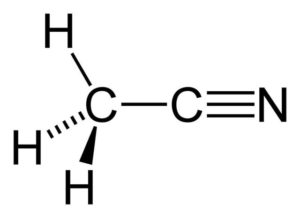
For example, acetonitrile (PubChem CID 6342, molecular formula C₂H₃N, molecular weight 41.05 g/mol) is stocked in both ACS and HPLC/gradient grades — chemically the same molecule, but only the HPLC grade is certified for low UV absorbance and column compatibility.

How do you read a Certificate of Analysis?

The Certificate of Analysis (CoA) is the proof behind the grade. Check four things: the assay (actual measured purity for that lot), the individual impurity limits (water content, trace metals, UV absorbance for HPLC grades), the lot/batch number so you can trace the material, and the specification standard it was tested against. If a grade is critical to your process, ask for the CoA before the material ships, not after.

What grades does RightPath stock?

RightPath Industries carries analytical solvents and reagents across ACS, reagent, HPLC/gradient, LC-MS, and USP grades, sourced from qualified manufacturers with lot-traceable Certificates of Analysis. Browse the full high purity analytical solvents category for grade options on acetonitrile, methanol, isopropyl alcohol, dichloromethane, hexanes, and more. Verified physical and identity data for every chemical can be cross-checked on PubChem.

How to order the right grade from RightPath

Tell us the application (for example, “gradient HPLC” or “pharma manufacturing”) and we will confirm the correct grade, pack size, and lead time. We supply from bottles to pails, drums, and IBC totes with documentation to match. Request bulk pricing and include your grade requirement so we can quote the exact specification you need.

Frequently asked questions

Is reagent grade the same as ACS grade?

Yes, in almost all cases. “Reagent grade” means the chemical meets American Chemical Society reagent specifications, so it is effectively synonymous with ACS grade for analytical use.

Can I use ACS grade solvent for HPLC?

Not reliably. ACS specifications do not control UV absorbance or filtration, so an ACS solvent can create baseline noise or clog a column. Use HPLC or LC-MS grade for chromatography.

What is the highest purity chemical grade?

For most laboratory work, HPLC/LC-MS and ACS grades are the highest general standards. Specialized ultra-high-purity grades (semiconductor/electronic grade, 99.999%) exist for specific industries but are not needed for routine analysis.

Does a higher grade always cost more?

Generally yes, because tighter impurity limits require more purification and testing. Match the grade to the application — paying for HPLC grade to run a simple extraction wastes money, while using technical grade in an analytical method risks your results.

How do I verify the grade I received?

Check the Certificate of Analysis that ships with the lot against your purchase order. It lists the measured assay, impurity limits, batch number, and the specification the material was tested against.

What is HPLC Grade Acetonitrile?

It is perhaps one of the most common solvents used in the laboratory today, HPLC Grade Acetonitrile.  The term HPLC stands for high performance liquid chromatography.  HPLC is an analytical chemistry technique that forces a sample with pressure and pumps through a column filled with absorbent material. As the material passes through the common different flow rates occur when different materials are absorbed into the column at different rates leading to separation.  This separation is then measured and compared with known results to identify your sample.

Now that we know what HPLC stands for why do we use HPLC grade?  The term grade stands for the purity and cleanliness of a solvent.  When performing HPLC testing you want to know exactly what’s in the solvent to avoid contamination and incorrect identification of samples.  This is why only high purity HPLC grade acetonitrile can be used.  If another grade such as ACS grade acetonitrile was used your sample would contaminants and peaks and valleys all over the place giving you a false identification.  It is imperative that your solvents are not only clean but also reliable.  That is why RightPath Industries created highpuritysolvents.com, an online web store allowing you to purchase HPLC grade acetonitrile at a fair price quickly and easily.

Acetonitrile-300x218 What is HPLC Grade Acetonitrile?

This is why we offer HPLC grade acetonitrile to our analytical and laboratory customers to ensure that each and every time you get consistent and reliable results.  Not to mention our acetonitrile is priced significantly less than our competitors.  If you have any questions or would like to place an order for Acetonitrile or any high purity solvents simply visit our online store

Acetonitrile-300x218 What is HPLC Grade Acetonitrile?

Login / Register